How ECM Data Can Help Explain Poor Engine Performance
Poor engine performance does not always point to one obvious mechanical failure.
A truck may feel weak under load, use more fuel than usual, idle differently, or hesitate during acceleration without showing a clear external problem. In those situations, guessing can lead to unnecessary parts replacement and more downtime.
Electronic control module, or ECM, data can give technicians a better starting point by showing how the engine and related systems are operating under real conditions.
Trouble Codes Are Only Part of the Picture
Diagnostic trouble codes can be useful, but they do not always identify the failed component directly.
A code may indicate that a sensor reading is outside an expected range, that pressure is too low, or that a system is not responding correctly. The actual cause could be a sensor, wiring issue, air leak, fuel problem, mechanical restriction, or another condition affecting the same system.
That is why Diesel Diagnostic & Repair looks beyond the code itself.
ECM information can help show what was happening before and during the fault, giving technicians more context before parts are replaced.
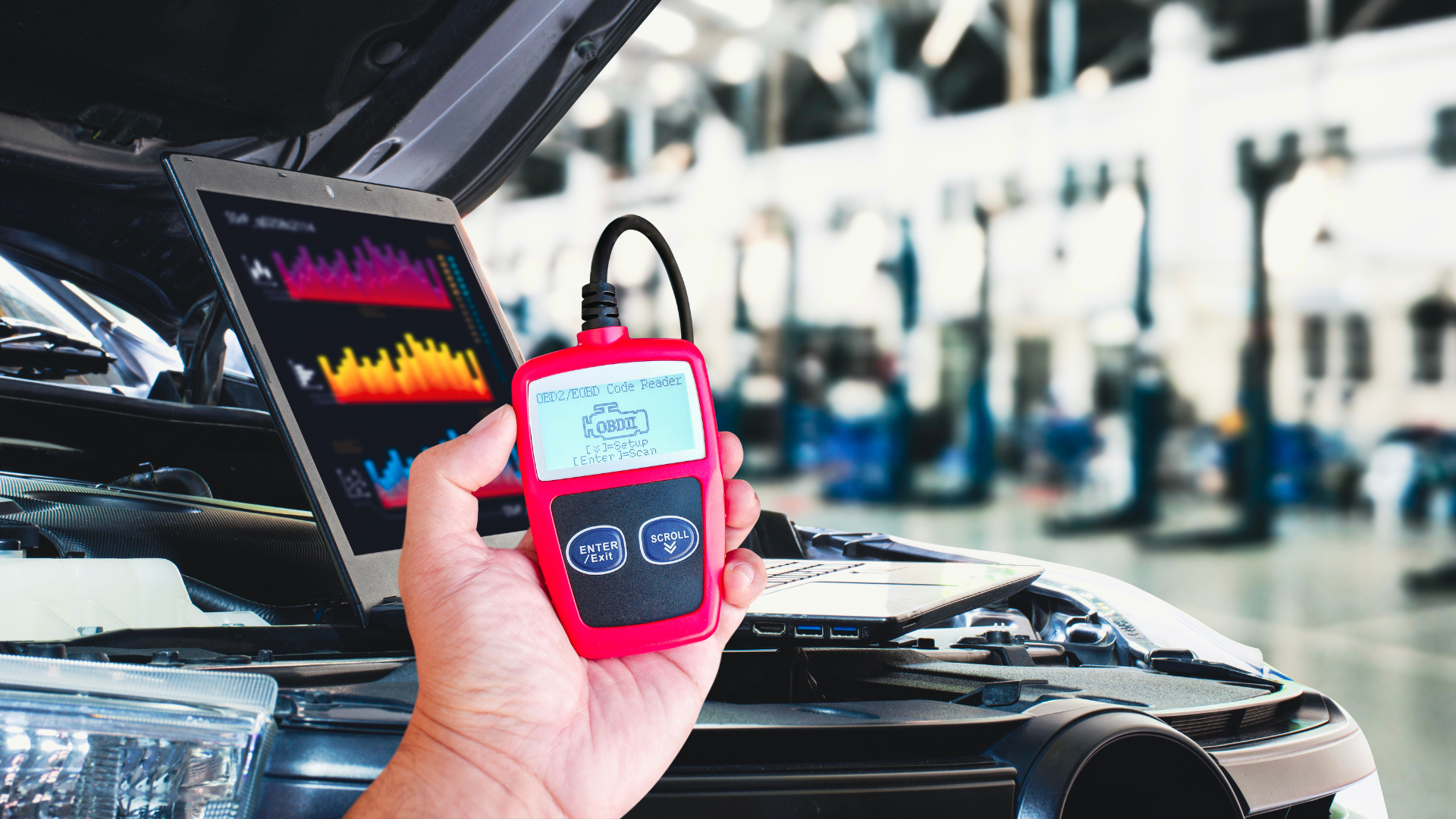
Live Data Can Reveal Patterns
One of the most useful parts of electronic diagnostics is the ability to compare multiple readings while the engine is operating.
Depending on the truck and problem, technicians may review boost pressure, fuel pressure, engine temperature, intake readings, aftertreatment information, and other available parameters.
The important part is not simply whether one number looks unusual.
Technicians look at how different readings relate to one another. A drop in power combined with abnormal boost or fuel-pressure behavior, for example, may help narrow the search much faster than replacing components based only on symptoms.
Problems Under Load May Not Appear at Idle
Some diesel issues only become obvious when the truck is working.
An engine can idle smoothly in the shop and still struggle while pulling a grade or hauling a heavy load. Boost leaks, fuel-delivery problems, turbo actuator issues, cooling-system weaknesses, and airflow restrictions may become more noticeable as engine demand increases.
ECM data can help technicians compare how the system behaves under those conditions.
That information is especially valuable when the driver reports reduced pulling power but the truck seems normal during a quick stationary inspection.

Freeze-Frame Information Can Help Reconstruct a Fault
Many systems capture operating data when a fault occurs.
This may include engine speed, load, temperature, pressure, and other information from the moment the code was triggered.
That snapshot can help explain whether the problem appeared during acceleration, highway cruising, heavy pulling, or another operating condition.
It does not automatically provide the answer, but it can help narrow the diagnostic path.
For intermittent problems, that context can be particularly useful because the fault may not occur again while the truck is in the shop.
Electrical Problems Can Create Misleading Symptoms
Modern heavy-duty trucks rely on networks of sensors, modules, wiring, and electrical connections.
A poor ground, damaged connector, weak power supply, or wiring problem can create symptoms that appear to point toward a much more expensive component.
ECM data can help identify readings that do not make sense together, giving technicians a reason to test the electrical side of the system before replacing major parts.
That kind of testing can help prevent unnecessary repair costs and repeat visits.

Data Still Needs Experienced Interpretation
A diagnostic scan tool is only useful when the information is interpreted correctly.
Numbers on a screen do not replace mechanical knowledge, physical inspection, pressure testing, electrical testing, or driver feedback.
The best diagnostic process combines electronic data with hands-on testing.
Diesel Diagnostic & Repair uses that approach to determine whether poor performance is related to fuel delivery, turbo and airflow issues, electrical faults, aftertreatment problems, cooling concerns, or another system.
Better Diagnosis Can Mean Less Downtime
For fleets, accurate diagnosis matters because every unnecessary repair can extend downtime.
Replacing a turbo, injector, sensor, or module without confirming the cause can waste both time and money. If the original problem remains, the truck may return with the same symptoms.
Diesel Diagnostic & Repair provides advanced diagnostics, heavy-duty truck repair, fleet maintenance, mobile diesel repair, and 24/7 roadside support throughout Western Pennsylvania and Eastern Ohio.
When a truck loses power or simply does not perform the way it should, ECM data can provide important clues. Combined with proper testing and experienced interpretation, those clues can help technicians get closer to the real problem before expensive parts are replaced.


 GET A FREE ESTIMATE