Why Overheating Under Load Can Point to More Than the Radiator
A diesel engine that runs at a normal temperature around town but overheats while climbing grades, hauling a heavy load, or operating under sustained demand is telling you something important.
The radiator may be part of the problem, but it is not the only possibility.
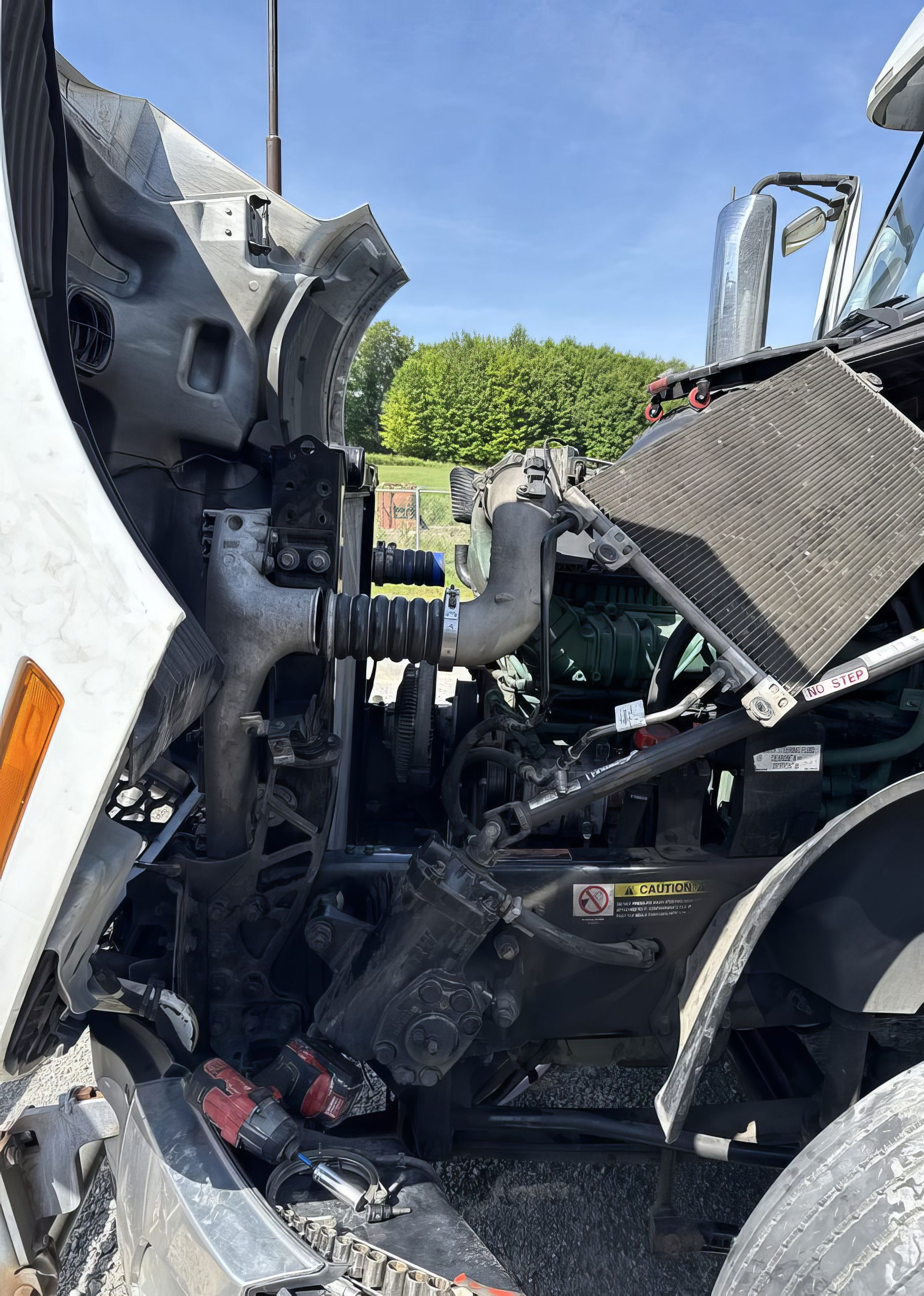
Cooling-system performance depends on several components working together, including the water pump, fan clutch, thermostat, coolant passages, belts, hoses, charge-air system, and even engine load itself. When overheating appears only under demand, diagnosis should focus on the entire system rather than one part.
Heavy Load Exposes Weaknesses
At idle or during light driving, the engine produces less heat. A marginal cooling system may still keep temperature under control because demand is low. Once the truck begins pulling hard, heat output increases significantly.
That can expose a weak water pump, partially restricted radiator, slipping fan clutch, poor airflow, or coolant circulation problem that was not obvious under easier conditions.
This is why a truck can appear completely normal in the shop and still overheat on the road.
The Radiator May Be Restricted
Radiators can lose efficiency gradually.
Internal deposits may restrict coolant flow, while dirt, debris, bugs, oil residue, or bent fins can reduce airflow through the core.
A radiator does not have to be completely blocked to create problems.
It may provide enough cooling during normal driving but fall behind when engine temperature rises quickly under load.
Testing flow and inspecting the core can help determine whether the radiator is actually the limiting component.
Water Pump Problems Can Be Less Obvious
A failing water pump does not always leave a visible coolant leak.
Bearing wear, internal damage, or an eroded impeller can reduce circulation without creating an obvious puddle.
At lower demand, the system may still move enough coolant to maintain normal temperature.
During a long grade or heavy pull, however, reduced circulation may no longer be sufficient.
That is one reason
water pump condition should be considered when overheating appears mainly under load.
Fan Clutch Performance Matters
The fan clutch plays a major role in moving air through the radiator when additional cooling is needed.
If the fan does not engage properly, the cooling system may struggle during heavy engine load, hot weather, or low-speed operation.
A weak fan clutch can sometimes mimic radiator or water pump problems.
Checking fan engagement and commanded operation can prevent unnecessary replacement of other cooling-system components.
Belts and Tensioners Can Affect Cooling
The water pump and fan system often depend on proper belt operation.
A worn belt, weak tensioner, or slipping drive system can reduce component speed.
That may not produce dramatic symptoms at idle.
Under load, however, the difference can become more noticeable.
Inspecting belts, pulleys, and tensioners is a simple but important part of overheating diagnosis.
Coolant Condition and System Pressure Matter
Coolant does more than carry heat.
The proper mixture also helps protect against corrosion and supports the cooling system’s operating characteristics.
Low coolant level, contamination, trapped air, pressure-cap problems, or internal leaks can all affect temperature control.
Pressure testing can help identify leaks that may not be visible during a basic inspection.
A truck that repeatedly needs coolant should always be investigated rather than simply topped off.
Engine and Airflow Problems Can Add Heat
Not every overheating issue begins inside the cooling system.
Restricted intake airflow, charge-air cooler problems, aftertreatment restrictions, or engine-performance issues can make the engine work harder than normal.
That additional load creates more heat.
If overheating is accompanied by low power, excessive smoke, boost problems, or regeneration concerns, diagnosis should include those systems as well.
Test the Truck Under Real Conditions
Overheating under load is a good example of why heavy-duty diagnostics need to reflect the way the truck actually operates.
A quick idle test may not reproduce the problem.
Diesel Diagnostic & Repair provides computerized diagnostics, cooling-system testing, heavy-duty truck repair, fleet maintenance, mobile diesel service, and 24/7 roadside support throughout Western Pennsylvania and Eastern Ohio.
If your truck stays cool at idle but overheats on grades, under heavy loads, or during sustained highway operation, contact Diesel Diagnostic & Repair at (814) 786-3700. Testing the complete cooling and engine system can help identify the real cause before unnecessary parts are replaced.


 GET A FREE ESTIMATE