Why Fuel Pressure Should Be Tested Under Load
A diesel engine can appear to have normal fuel pressure while idling and still develop serious fuel-delivery problems on the road.
That is because the engine’s fuel demand changes dramatically under acceleration, while climbing grades, or when hauling a heavy load. A weak pump, restricted filter, collapsing fuel line, air intrusion, or other supply-side problem may not show up until the system is asked to deliver more fuel.
For that reason, fuel pressure testing under load can be far more useful than checking pressure only at idle.
Idle Testing Can Miss Real-World Problems
At idle, the engine uses relatively little fuel.
A marginal fuel system may still maintain acceptable pressure because demand is low.
Once the truck accelerates or pulls under load, the required fuel volume rises. If the system cannot keep up, pressure may begin to drop.
That pressure loss can cause hesitation, poor throttle response, reduced power, hard pulling under load, or intermittent fault codes. A truck that seems fine in the shop may therefore behave very differently on the highway.

Fuel Filters Can Restrict Flow
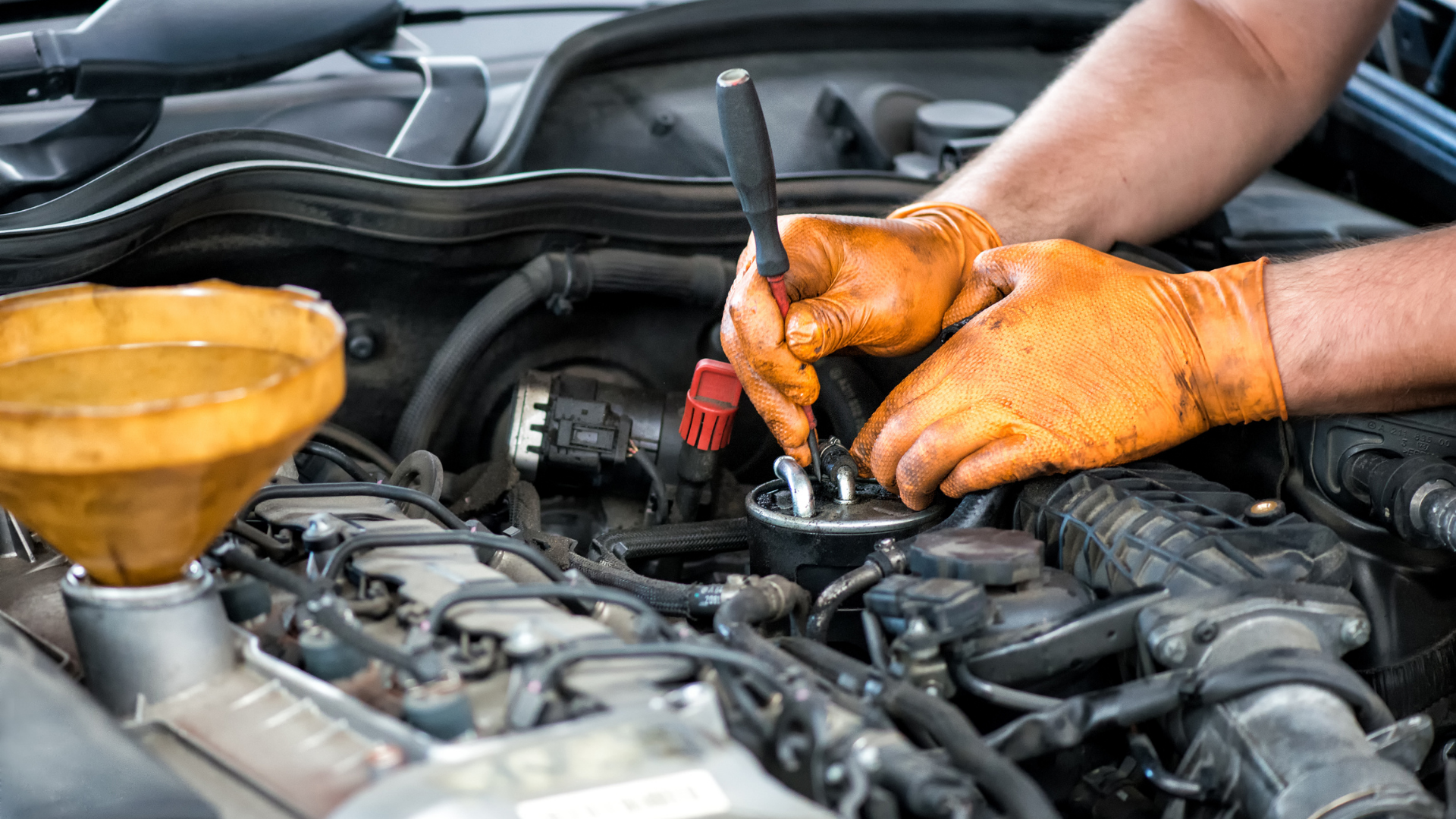
A partially clogged fuel filter may allow enough flow for idle and light driving but become restrictive during high-demand conditions.
This is especially common after contaminated fuel, neglected maintenance, or heavy debris buildup.
As flow demand increases, the restriction can create a pressure drop.
Replacing the filter may solve the problem, but only if the filter itself is the root cause.
If contamination is coming from the tank or another part of the system, the new filter may clog again quickly.
Weak Lift Pumps May Fail Under Demand
A lift pump does not always fail all at once.
It may gradually lose output and continue working well enough for the engine to start and idle.
Under load, however, a weak pump may be unable to maintain the required supply pressure.
That can starve the high-pressure side of the system and create symptoms that look like injector or high-pressure pump problems.
Testing actual fuel pressure during demand helps separate a weak supply pump from more expensive components farther downstream.
Air Intrusion Can Create Intermittent Symptoms
Air entering the fuel system can also cause inconsistent pressure.
Loose fittings, cracked hoses, damaged seals, or suction-side leaks may allow air into the fuel supply without always leaking fuel externally.
The problem can become more noticeable when engine demand increases.
Symptoms may include hard starting, surging, power loss, or pressure readings that fluctuate instead of remaining stable.
Because air leaks can be intermittent, testing under operating conditions is often more revealing than a quick static check.
Low Pressure Can Affect More Than Performance
Modern diesel systems depend on consistent fuel delivery for proper engine operation.
If supply pressure falls too low, the engine may struggle to maintain injection demand.
That can contribute to poor combustion, reduced power, rough running, or regeneration problems depending on the engine and fault condition.
Long-term fuel starvation may also place additional stress on pumps and injectors.
That is why low-pressure problems should be diagnosed early instead of ignored until the truck will no longer run properly.

Data Matters More Than Guessing
Fuel-system symptoms overlap with many other problems.
A truck with low power might have:
- A restricted fuel supply
- A boost leak
- A turbocharger problem
- Injector issues
- Aftertreatment restriction
- Electrical or sensor faults
Replacing parts based only on symptoms can become expensive quickly.
Fuel pressure testing gives technicians actual data they can compare at idle, during acceleration, and under load.
That information helps narrow down whether the problem is on the supply side before larger components are replaced.
Test the System the Way the Truck Actually Works
A heavy-duty truck is not designed to spend its life idling in a shop bay.
It works under load.
The diagnostic process should reflect those real operating conditions.
Diesel Diagnostic & Repair provides advanced diesel diagnostics, fuel-system testing, computerized troubleshooting, fleet maintenance, and heavy-duty truck repair throughout Western Pennsylvania and Eastern Ohio.
If your truck loses power under load, hesitates on grades, shows low fuel-pressure faults, or runs differently on the road than it does at idle, contact Diesel Diagnostic & Repair at (814) 786-3700. Testing the fuel system under real demand can help identify the true cause before unnecessary parts are replaced.


 GET A FREE ESTIMATE