Why Overheating on Long Grades Is Different From Overheating at Idle
A diesel truck that stays cool at idle but starts running hot on long grades is showing a very specific kind of problem.
At idle, the engine is under relatively light load and produces less heat. On a steep pull, especially with a loaded truck or trailer, the cooling system has to work much harder.
Weaknesses that remain hidden in the shop can become obvious on the road.
That is why overheating under load should be diagnosed differently from a truck that overheats while sitting still.
Long Grades Put the Entire Cooling System Under Stress
Climbing a grade increases engine load, fuel demand, cylinder pressure, and heat production.
The cooling system has to move coolant efficiently and transfer that heat through the radiator while maintaining enough airflow across the cooling stack.
A truck can appear completely normal during an idle inspection and still have a cooling problem.
The system may simply have enough capacity at low load but not enough reserve when the engine is working hard.
That makes road testing and loaded diagnostics especially important.
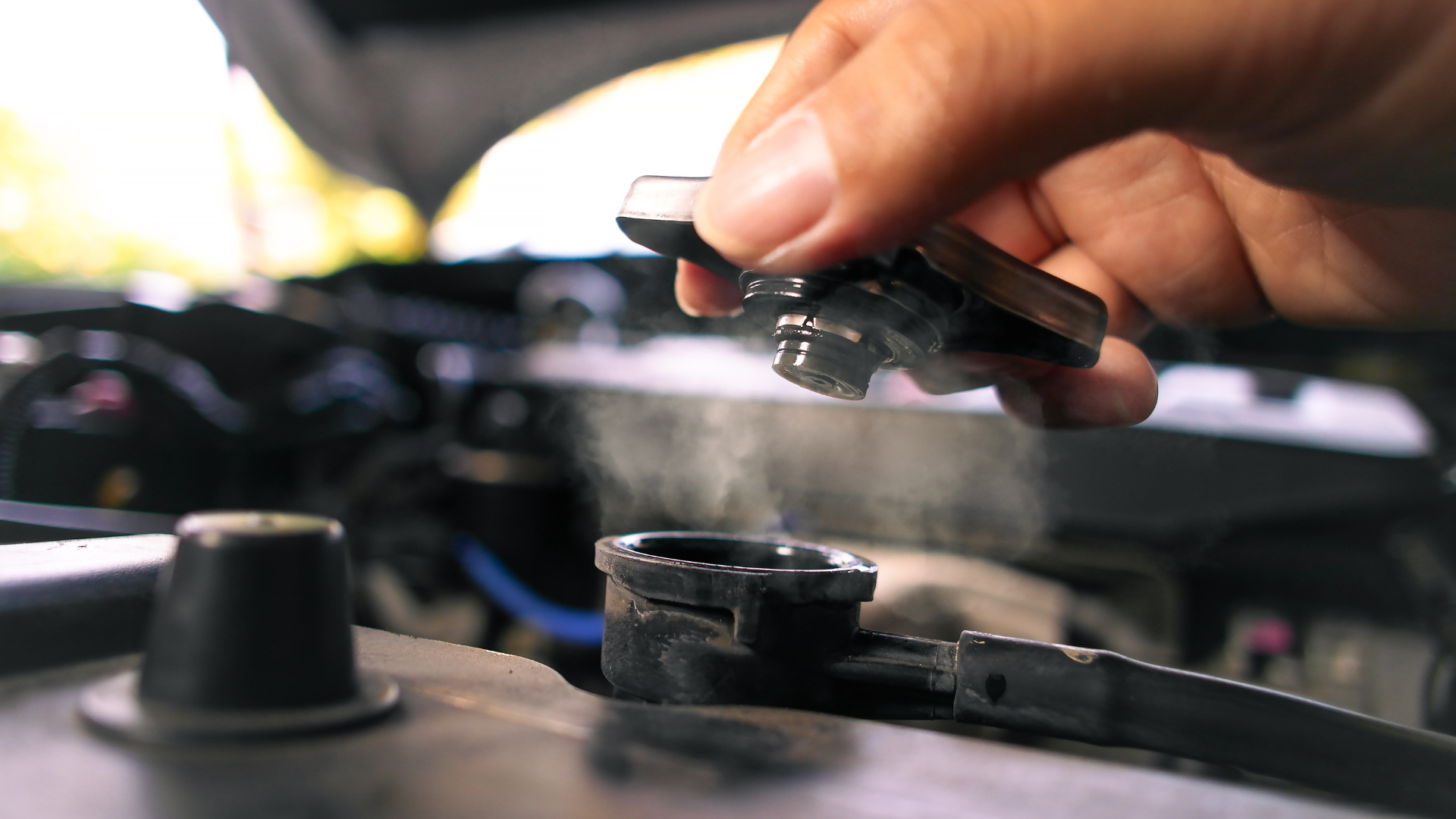
A Restricted Radiator May Only Fail Under Demand
A radiator does not have to be completely plugged to create problems.
Partial internal restriction, bent fins, dirt, oil residue, bugs, or debris between cooling components can reduce heat transfer.
At idle or during light driving, the radiator may still keep the engine within normal temperature range.
During a long climb, however, the cooling demand can exceed what the restricted radiator is able to handle.
That is why inspecting airflow through the cooling stack matters, not just looking at coolant level.
Fan Clutch Problems Can Be Easy to Miss
The fan clutch plays a major role when the engine needs additional cooling.
If it does not engage correctly, airflow through the radiator may be insufficient during heavy pulls, hot weather, or low-speed operation.
A weak fan clutch can sometimes be mistaken for a radiator or water pump problem.
Checking commanded fan operation and actual engagement can help prevent unnecessary parts replacement.
At Diesel Diagnostic & Repair, accurate testing is especially important because the goal is to identify the failing system before changing expensive components.
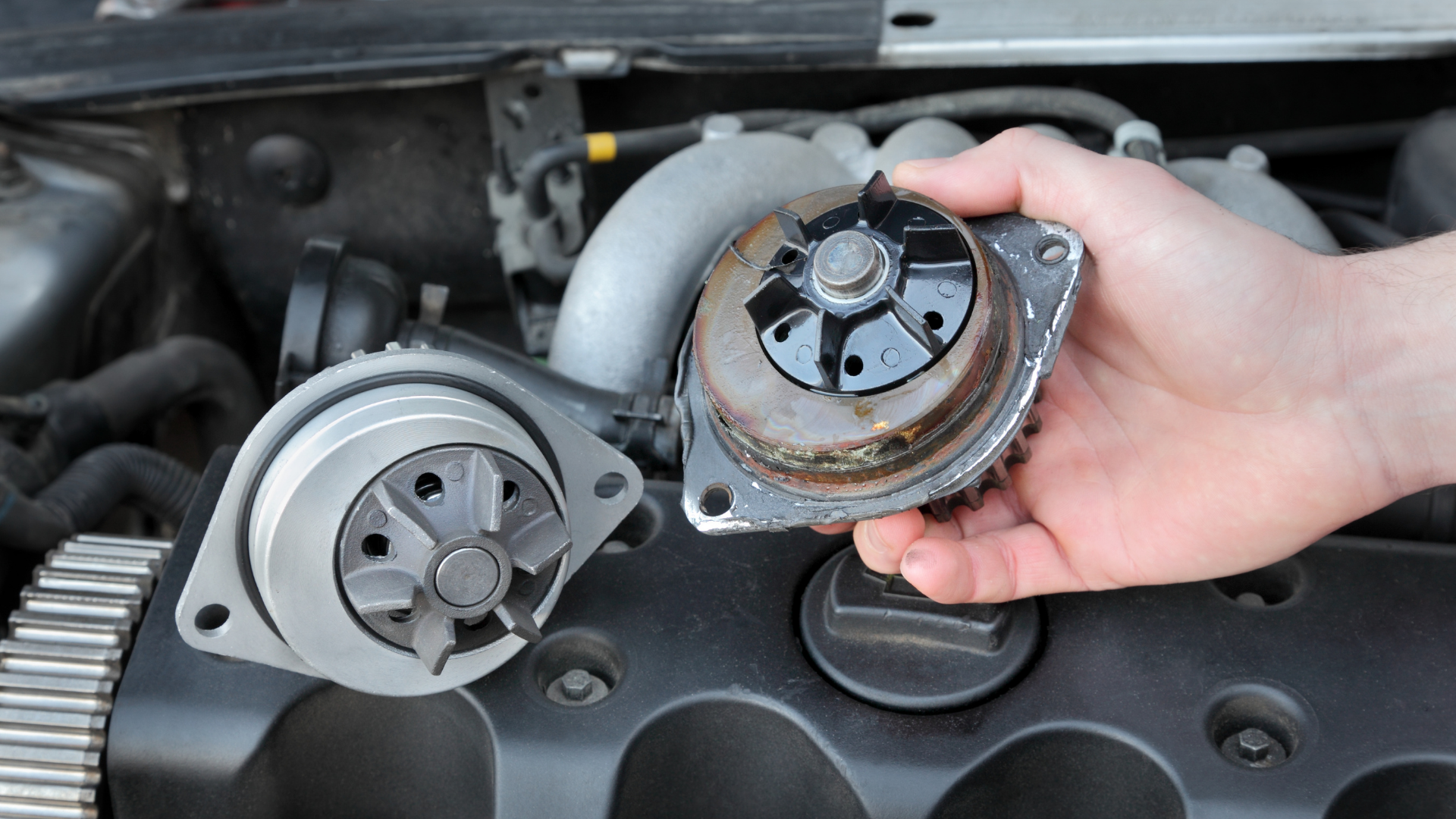
Water Pump Wear Can Reduce Circulation
A water pump can lose efficiency without producing an obvious external leak.
Bearing wear, internal damage, or impeller deterioration can reduce coolant circulation.
At idle, the system may still move enough coolant to keep temperature under control.
Under sustained load, reduced flow may become a problem.
That is another reason diagnosis should look at the complete cooling system instead of assuming the radiator is automatically at fault.
Airflow and Engine Performance Can Be Connected
Sometimes the cooling system is working harder because another system is creating excess heat.
Restricted intake airflow, charge-air cooler problems, boost leaks, exhaust restrictions, or aftertreatment issues can increase engine workload.
A truck that is overheating while also losing power, smoking excessively, or struggling with regeneration may have more than one problem.
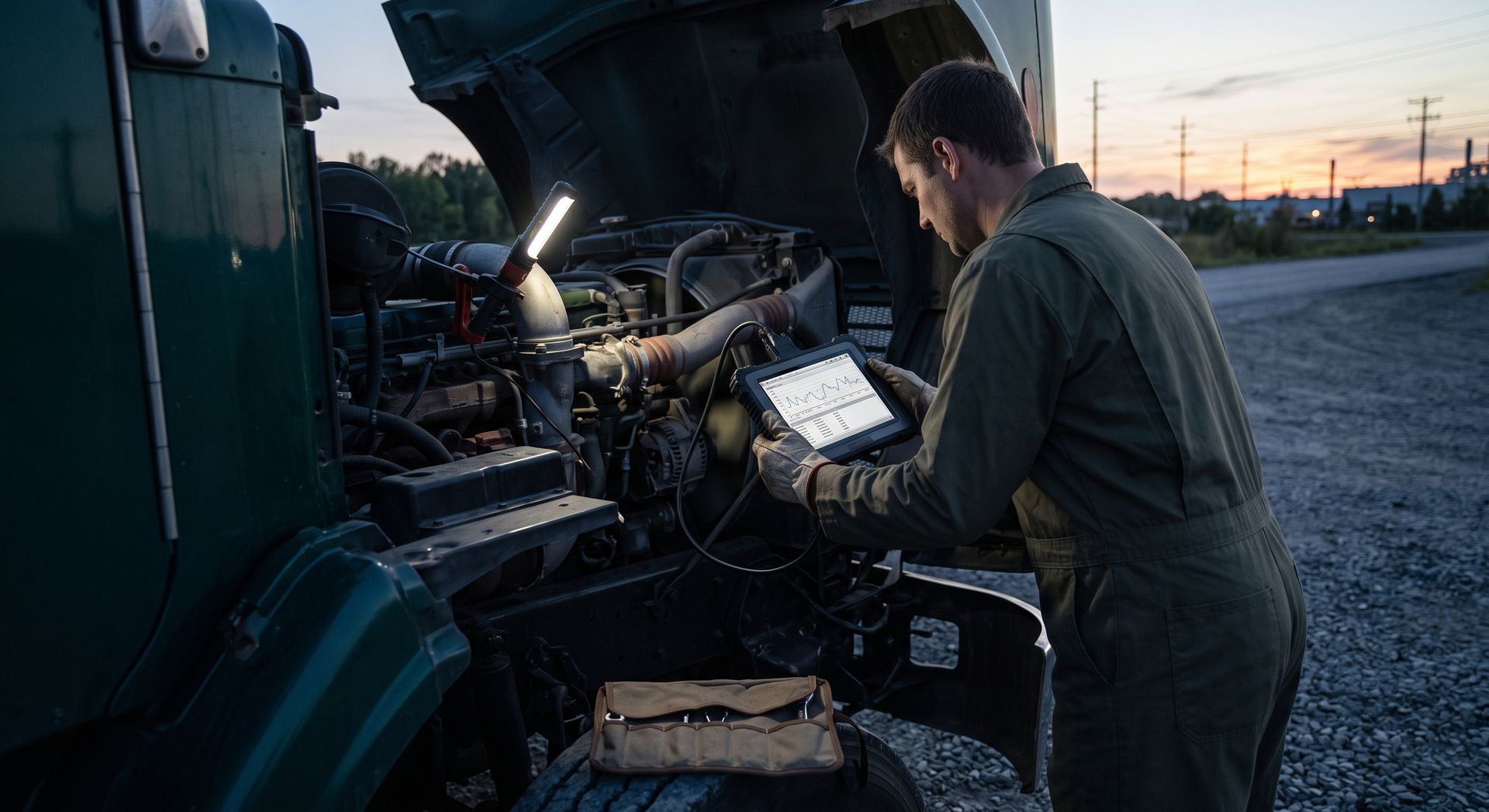
Modern diesel diagnostics should evaluate live data and overall engine performance rather than treating temperature as an isolated symptom.
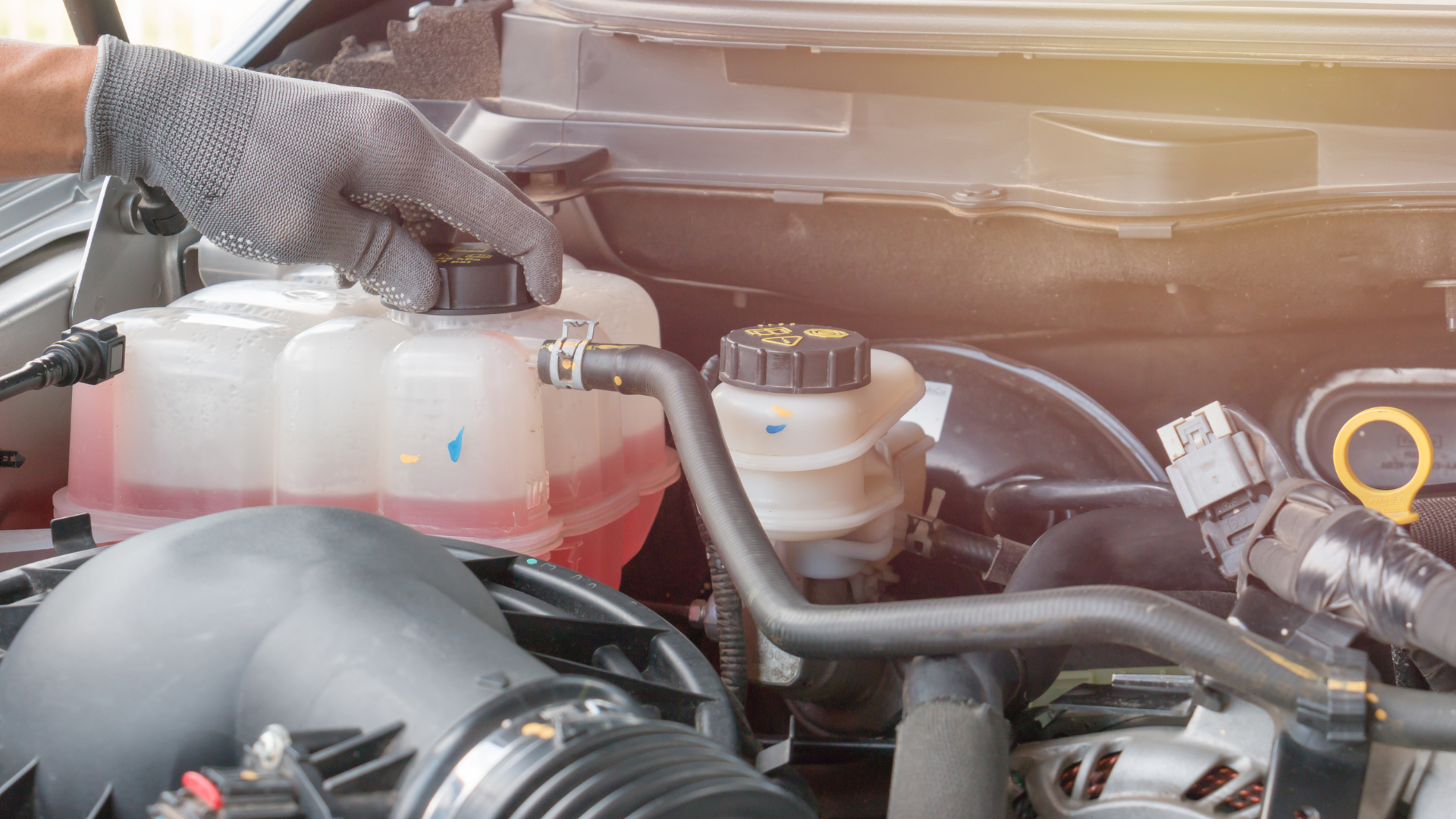
Coolant Condition and Pressure Still Matter
Low coolant level, trapped air, contamination, pressure-cap problems, and small leaks can all reduce the cooling system’s ability to control temperature.
A pressure test can help identify leaks that may not appear during a visual inspection.
If a truck repeatedly needs coolant, that should be investigated rather than handled with regular top-offs.
Repeated coolant loss is information.
It should be treated as part of the diagnosis.
Loaded Testing Can Reveal What Idle Testing Cannot
The most important lesson is that the truck should be evaluated under conditions that reproduce the complaint.
If overheating happens on grades, diagnostics should account for engine load, boost, fan operation, coolant temperature, airflow, and fuel demand under similar conditions when possible.
A quick idle test may simply never reveal the issue.
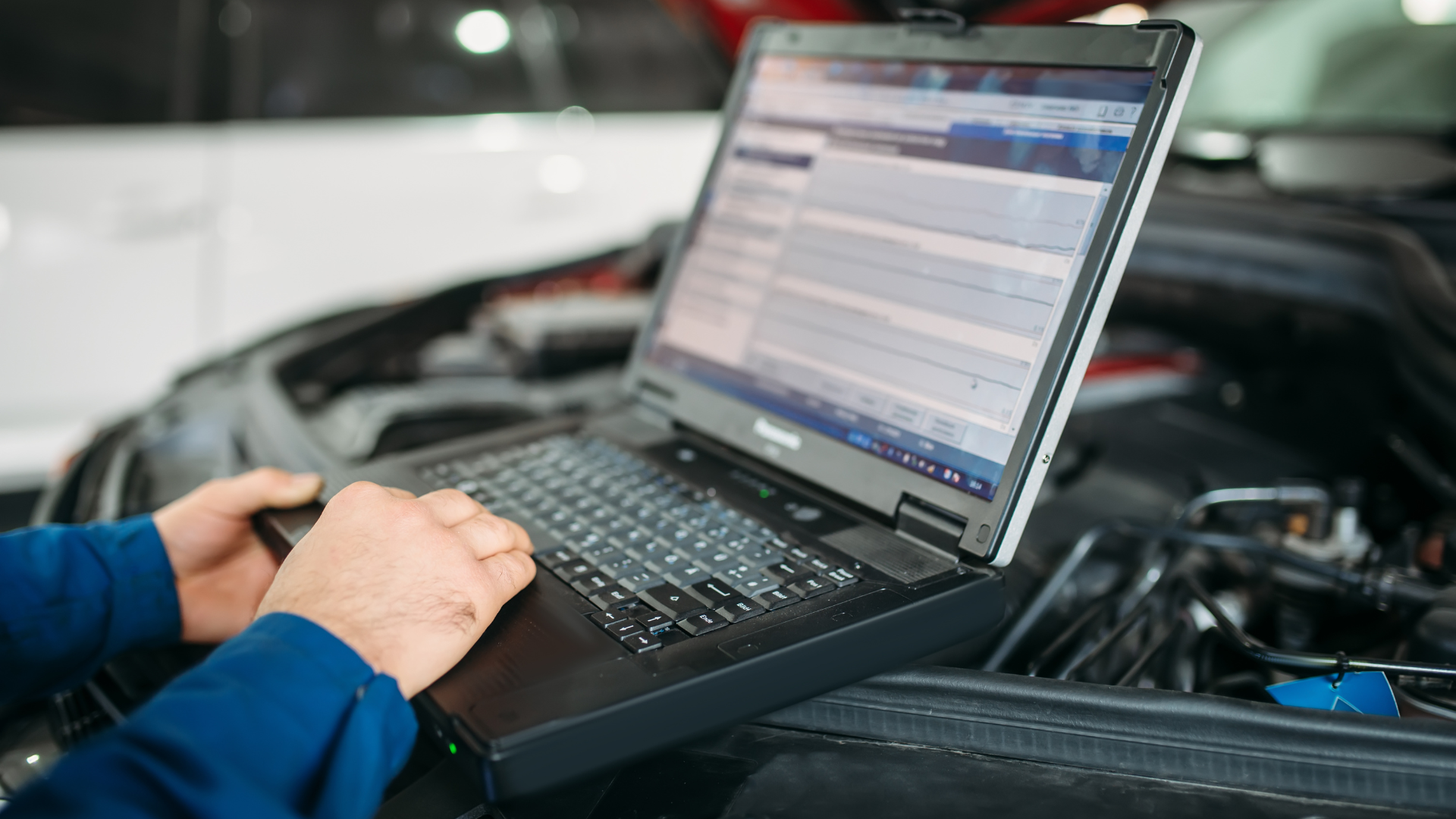
Diagnose the Cause Before Replacing Parts
Overheating on a long grade is not automatically a radiator problem.
It can involve the fan clutch, water pump, cooling stack, belts, coolant system, airflow, aftertreatment, or engine performance.
Diesel Diagnostic & Repair provides computerized diagnostics, heavy-duty truck repair, fleet maintenance, cooling-system service, mobile diesel repair, and 24/7 roadside support throughout Western Pennsylvania and Eastern Ohio.
If your truck runs cool around town but starts overheating under load, contact Diesel Diagnostic & Repair at (814) 786-3700. Accurate testing can help identify the real cause before unnecessary parts are replaced.

 GET A FREE ESTIMATE